Addresse
Rosenbergstrsse 17, 8200 Schaffhausen
Besuch nach Vereinbarung

SHOP
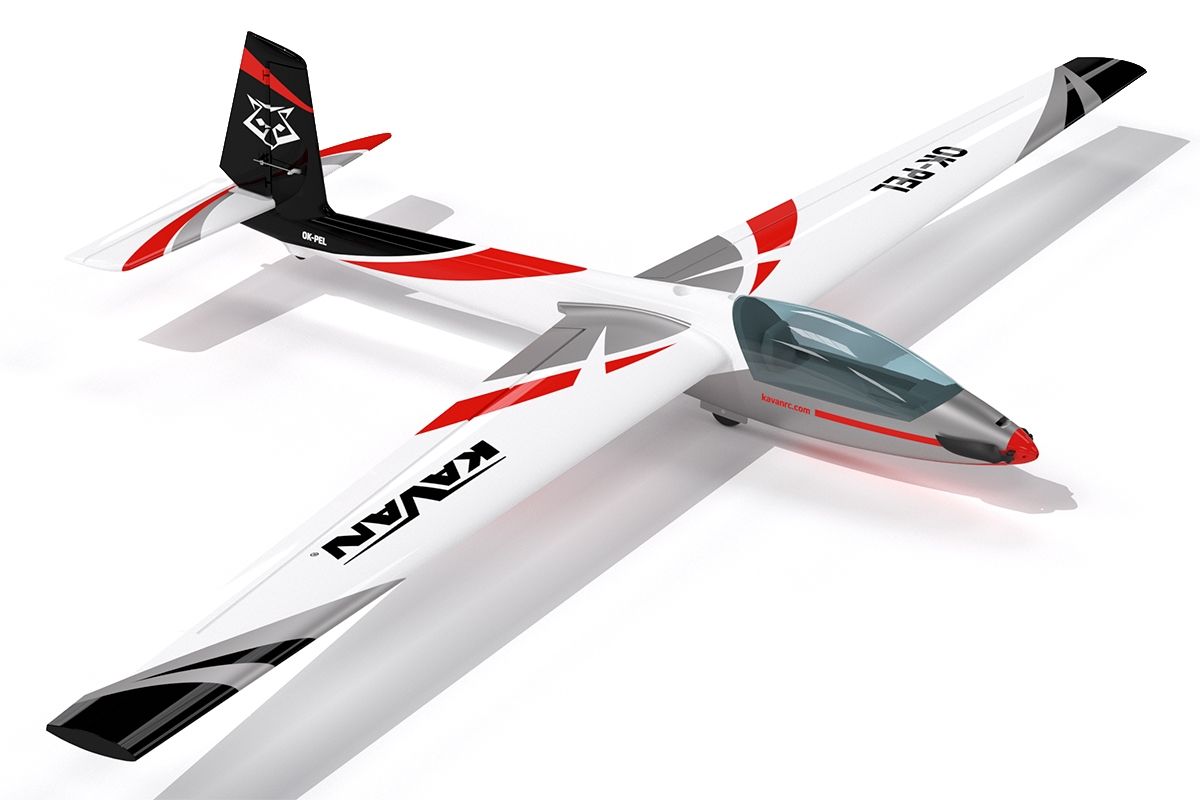
The fully assembled semiscale model of the high-performance Polish aerobatic glider, with a wingspan of 2400 mm, made from nearly indestructible, carbon-fiber-reinforced, extruded polyolefin foam (EPO) for thermal and slope flying. Equipped with a built-in C3548-750 brushless motor, 11x8" folding propeller, R-50SB ESC, and 4 micro servos. Controls include ailerons, rudder, elevator, and motor speed. Designed for 4S LiPo 2200–2700 mAh (min. 30C).
In the late 1980s, the Polish company Margański & Mysłowski Zakłady Lotnicze realized there was a gap in the market for aerobatic gliders—the good old all-wood Kobuz 3 SZD-21-2b, designed in the 1950s, was no longer sufficient. So in 1991, designers Edward Margański and Jerzy Cisowski, with the support of Jerzy Makula (then a three-time world champion in aerobatics), developed the new Swift S-1 model, a modern all-composite aerobatic glider with an incredible roll rate (just 4 seconds) that can also handle loads of +/-10 g. The reward came almost immediately—Jerzy Makula won his fourth FAI World Championship title in aerobatics that same year! And now you can enjoy flying the semiscale version of this beautiful glider with a wingspan of 2400 mm, powered by a high-performance brushless motor!
The model’s fuselage is made of high-strength EPO foam (extruded polyolefin) with rigid internal carbon fiber reinforcements. The C3548-750 brushless electric motor, equipped with an 11x8-inch folding propeller and a KAVAN R-50SB ESC featuring a powerful BEC regulator—necessary for powering the four high-torque micro servos on board—is mounted in the nose. The canopy is removable and is secured at the front with a pin and at the rear with a magnet. In the nose, there is enough space for a flight battery and a receiver. The aileron and elevator servos are located in the fin; the control surfaces are controlled by short, straight linkages.
The model’s wing, made of EPO foam, consists of two sections with carbon fiber spars, the protruding parts of which also serve as wing connectors and fit into the duralumin housings in the fuselage. The wing halves are secured with a plastic screw. The ailerons, which span the entire width of the wing (reinforced with carbon fiber tubes), are controlled independently by two servos via short, straight wire linkages.
The tail units are also made of EPO foam with reinforcements of carbon fiber tubes. The horizontal stabilizer is attached to the fuselage with two screws and is easy to install and remove.
The model is powered by a C3548-750 class brushless motor with a 50 A KAVAN R-50SB ESC.
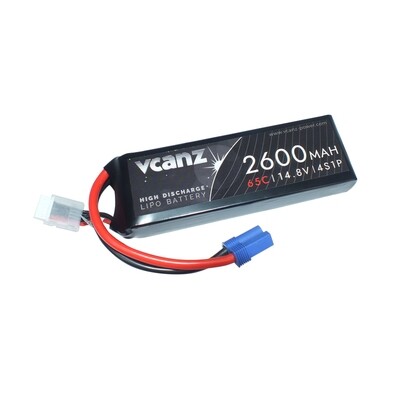
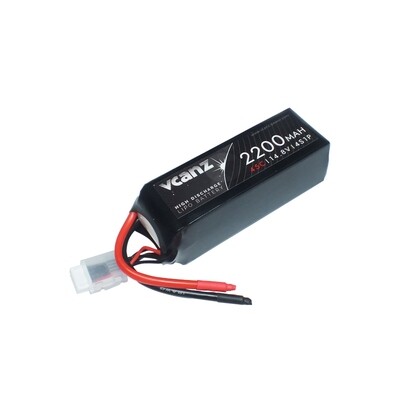
For power, you will need a 4-cell LiPo pack with a capacity of 2200–2700 mAh and a minimum discharge rate of 30C. Choose a specific model to ensure the correct center of gravity is maintained as closely as possible without additional ballast.
To control the model, you can also use a 4-channel RC transmitter set without special functions—in the basic version, the ailerons are always connected to a single channel using a Y-cable. Of course, it is ideal to use at least a 6-channel computer RC set that allows for independent control of the ailerons via two servos and a mix for the airbrake. In this setup, both ailerons move upward. This is also possible with the affordable Radiolink AT9S, AT10II, or Futaba T6K and T10J transmitters. In this case, the Y-cable for the ailerons in the fuselage must be replaced with two separate (15–30 cm) extension cables. The manual naturally also includes a detailed table with proven standard settings for the control surfaces (including mixers), so you can easily prepare the Swift S-1 for flight.
The ARF kit includes: the finished fuselage, wings, and tail surfaces made of EPO foam with a built-in motor, propeller, ESC, and 4 servos, as well as instructions.
Bitte lesen Sie in der Artikelbeschreibung die Angaben zur Lieferzeit.
Die im Shop oder auf Preislisten angegebenen Lieferfristen oder Angaben über die Verfügbarkeit können sich kurzfristig ändern (z.B. Zwischenverkauf, Verzögerungen im Wareneingang und höherer Gewalt etc.). In diesen Fällen wird der Käufer umgehend informiert. Die Waren werden normalerweise am Folgetag des Bestell- oder Zahlungseingangs dem Transporteur übergeben. Lieferbenachrichtigungen und Liefertermine auf eine gewünschte Zeit sind kostenpflichtig.
Besuch nach Vereinbarung